
Emergency Preparedness for Caregivers in Massachusetts
Massachusetts caregivers may need to prepare for nor’easters, extreme heat, flooding, and power outages. A clear emergency plan can reduce confusion and help protect an older adult or person with a disability when normal routines are disrupted.
This caregiver emergency preparedness guide explains what to plan, what to pack, and how to prepare for medical, mobility, communication, and power needs at home.
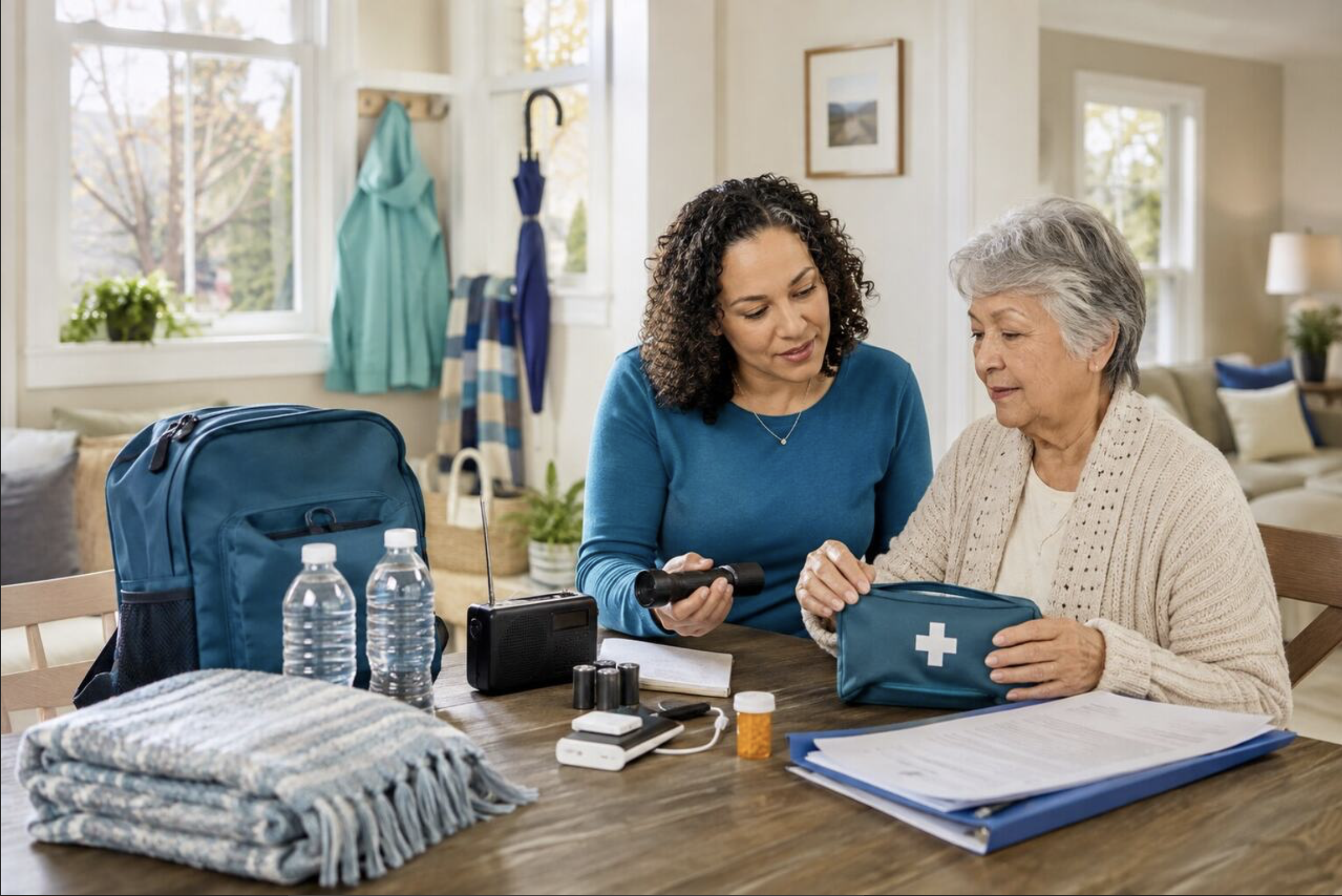
Why Caregiver Emergency Planning Matters
Emergencies can interrupt electricity, transportation, pharmacy access, home care routines, and communication. Older adults and people who rely on caregivers, medications, mobility aids, or powered medical equipment may face additional challenges. Planning ahead gives everyone clear responsibilities before conditions become urgent.
Call 911 for a life-threatening emergency. During a disaster, Massachusetts residents can also call 211 for non-emergency information, including available shelters and disaster assistance.
1. Create a Caregiver Emergency Plan
Write a short plan that the caregiver, the person receiving care, backup caregivers, and trusted family members can understand. Keep one copy at home, one in a grab-and-go folder, and a secure electronic copy that can be reached from a phone.
- Emergency contacts: family members, neighbors, physicians, pharmacy, utility company, and local emergency management office.
- Meeting locations: one near the home and another outside the neighborhood.
- Evacuation plan: two safe exit routes and transportation that can accommodate mobility equipment.
- Communication plan: an out-of-area contact and simple text messages such as “Safe,” “Need help,” or “Evacuating.”
- Backup care plan: identify who can step in if the primary caregiver becomes unavailable.
- Pet plan: food, medication, carrier, identification, and a pet-friendly destination.
Review the plan with everyone involved. A brief practice drill twice a year can reveal missing supplies, transportation problems, or unclear responsibilities.
2. Build an Emergency Kit for the Person Receiving Care
FEMA recommends keeping enough supplies for several days. Customize the kit for the person’s health, communication, dietary, sensory, and mobility needs. Store supplies in a place that is easy to reach and check expiration dates regularly.
Basic supplies
- Water and shelf-stable food that meets dietary needs
- Flashlights, extra batteries, and phone power banks
- First-aid supplies, masks, hygiene items, and sanitation supplies
- Weather radio, blankets, seasonal clothing, and sturdy shoes
- Cash in small bills, spare keys, and copies of important documents
Medical and accessibility supplies
- An updated medication list with names, doses, schedules, allergies, and pharmacy information
- Medications and medical supplies, in the amount permitted by the prescriber, pharmacy, and insurance plan
- Written instructions for oxygen, insulin, CPAP, feeding equipment, or other essential devices
- Backup batteries and chargers for hearing aids, communication devices, wheelchairs, and other equipment
- Extra eyeglasses, hearing-aid batteries, incontinence supplies, and mobility aids
- A brief description of how the person communicates and what assistance they need
Do not change a medication schedule or storage method without guidance. Ask the pharmacist or prescribing clinician how to protect temperature-sensitive medication and what to do if refrigeration or pharmacy access is interrupted.
3. Prepare for a Power Outage
Make a specific plan for anything that depends on electricity. List each essential device, its expected battery life, backup power option, and the person to call if power is not restored in time. Ask the equipment supplier and healthcare team for device-specific instructions.
- Charge phones, power banks, and medical-device batteries before a forecasted storm.
- Keep the utility company’s outage-reporting number available.
- Ask the local utility whether the household qualifies for a medical or life-support notification program. Enrollment may provide important communication, but it does not guarantee uninterrupted or priority restoration.
- Know where the person can safely go if the home becomes too hot, too cold, or unable to support essential equipment.
- Place working carbon monoxide detectors near sleeping areas and test them regularly.
Never use a generator, grill, camp stove, or other fuel-burning equipment inside a home, garage, basement, or enclosed area. Follow manufacturer and government safety instructions, keep generator exhaust away from doors and windows, and use carbon monoxide alarms.
4. Plan for Evacuation and Accessible Transportation
Decide in advance when the household would leave and where it would go. A caregiver should know how to safely move the person, what equipment must travel with them, and whether the vehicle or destination is accessible.
- Keep mobility devices, transfer equipment, medications, identification, and the emergency folder together.
- Write down how to disassemble or transport specialized equipment.
- Identify at least two transportation options.
- Confirm whether a planned destination can support mobility, communication, dietary, and power needs.
- Follow evacuation orders from public officials. Do not wait until travel conditions become unsafe.
5. Prepare for Common Massachusetts Weather Risks
Winter storms and extreme cold
Keep walkways clear, arrange snow removal, store warm clothing and blankets, and avoid unnecessary travel. Make a backup heating plan before a storm. Never use an oven or outdoor fuel-burning appliance to heat the home.
Extreme heat
Know the nearest accessible cooling location, keep water available unless the person has a clinician-directed fluid restriction, close curtains during peak sunlight, and monitor the person for concerning changes. Seek medical guidance when symptoms or health conditions create concern.
Flooding and severe storms
Move documents, medications, and equipment away from areas that may flood. Do not walk or drive through floodwater. Monitor official weather alerts and follow local instructions about evacuation, road closures, and shelter locations.
6. Keep Important Information Ready
Place copies of the following in a waterproof folder. Protect private health and identification information and share it only with people who need it to assist during an emergency.
- Photo identification and insurance cards
- Medication list, allergies, diagnoses, and physician and pharmacy contacts
- Emergency contacts and healthcare proxy information, if applicable
- Instructions and model numbers for medical and mobility equipment
- A description of daily assistance, communication, and behavioral support needs
Massachusetts Emergency Resources for Caregivers
- Massachusetts emergency preparedness for people with disabilities and access and functional needs
- Massachusetts 211 disaster information
- FEMA emergency planning for older adults
- FEMA emergency kit guidance
Frequently Asked Questions
What should a caregiver include in an emergency plan?
Include emergency contacts, medications, allergies, medical and mobility equipment, communication needs, evacuation routes, transportation, backup caregivers, and a safe destination.
How much medication should be kept for an emergency?
Ask the person’s prescriber, pharmacist, and health plan what emergency supply is permitted and how each medication should be stored. Do not skip, add, or alter doses without professional guidance.
What should a caregiver do if medical equipment loses power?
Follow the equipment supplier’s and healthcare team’s emergency instructions. Use the planned backup power or safe relocation option. Call 911 when the loss of equipment creates an immediate threat to health or safety.
Can Massachusetts 211 help during an emergency?
Massachusetts 211 provides non-emergency disaster information, including shelter and assistance information. Call 911 for a life-threatening emergency.
Support for Families Providing Daily Care at Home
Emergency planning is one part of supporting a loved one safely at home. If a Massachusetts resident needs daily physical assistance or cueing and supervision with activities such as bathing, dressing, eating, toileting, walking, or transferring, learn more about Adult Foster Care in Massachusetts and how Mass Care Link supports eligible families.